Food is part of the rhythm of a Key Largo stay. A simple breakfast before a boat, an easy lunch after time in the sun and an unhurried evening meal can shape the day as much as a major attraction. Planning those stops does not require a rigid restaurant itinerary. It requires knowing where you will be and leaving enough time to enjoy the meal.
Match a meal to the day’s main plan
For a morning departure, check when you need to be at the meeting point before choosing breakfast. An operator’s check-in time may be earlier than the boat’s advertised departure. Choose a manageable journey and avoid making the whole morning depend on an unfamiliar place serving you immediately. If you need a particular breakfast arrangement, confirm it before the day.
After a reef or paddling trip, keep lunch flexible. Actual return times and the time needed to change or collect your belongings can differ from a tidy itinerary. A meal that is easy to reach may be a better fit than crossing the island again for a single item you saw online. The reef-day guide explains how to leave that margin.
Look beyond a waterfront photograph
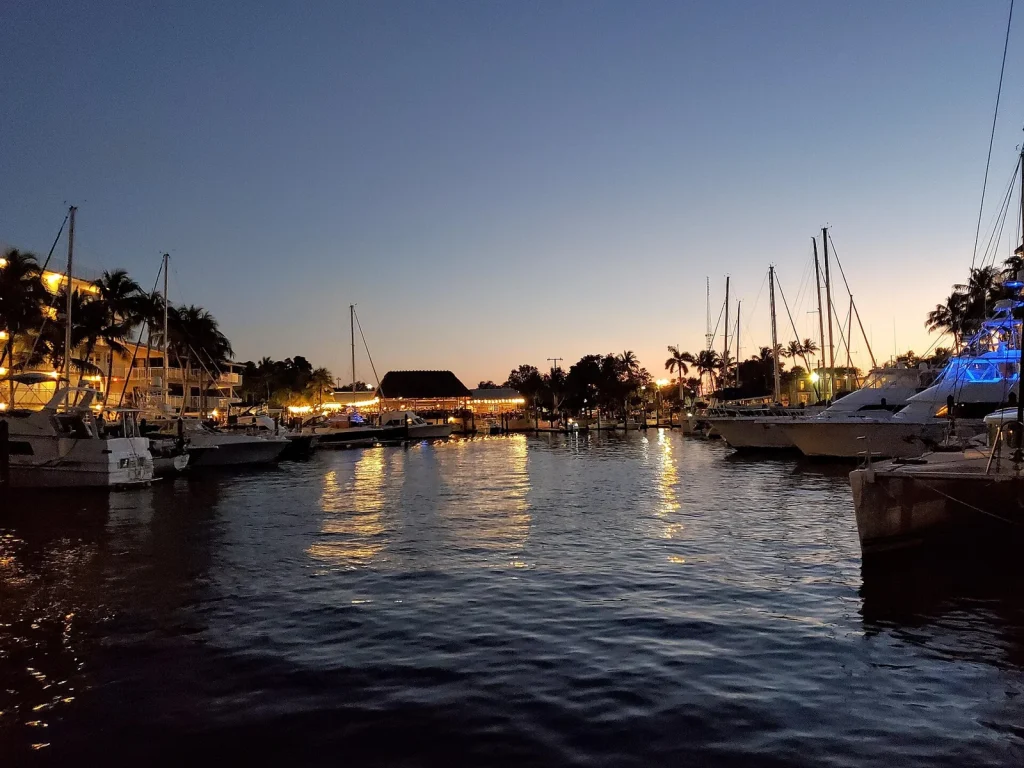
A waterside setting can be a pleasure, but check the details that matter to your group. Outdoor seating, shade, steps, parking and the distance from the car can affect the experience. A sunset image does not guarantee a waterfront table, a particular view or comfortable weather on the day you visit.
Key Largo is spread along a road corridor. Two places that look close on a map may not be connected by a pleasant walking route. Check crossings, lighting and sidewalks rather than assuming a short distance means an easy walk. If you plan to drink alcohol, arrange a suitable transport option before the evening begins.
Approach local dishes with curiosity
Seafood and Key lime pie are familiar parts of a Florida Keys food conversation, but every kitchen has its own menu and preparation. Ask what is being served, where relevant ingredients come from and how a dish is prepared. Do not infer that every fish on a menu was caught locally or that a particular recipe is the only authentic version.
Try what interests you without turning the meal into a checklist. A modest lunch or a good slice of pie can be enough of an occasion. Where a dish or restaurant is named in a current listing, verify it with the business before making a special trip. Menus, availability and ownership can change.
Ask directly about dietary requirements
If an allergy or another dietary requirement affects your choices, contact the restaurant directly. A short menu description may not explain preparation methods, shared equipment or substitutions. Tell the staff what matters and ask whether they can accommodate it. A travel guide cannot confirm a kitchen’s procedures or promise a safe meal.
For groups with different preferences, look at the current menu together before arriving. It can be useful to choose a flexible option for one meal and reserve a more specific choice for another. Keep the communication practical, especially when someone needs more than a simple ingredient omission.
Keep some room for a slower stop
A day that includes a water outing, a park visit and a long onward drive can become tiring. An unhurried meal offers a natural pause. Decide which activity is the anchor and which can move, so the meal is not squeezed into whatever few minutes remain. Our parks guide offers quieter ideas that can fit around the table.
Carry the same approach into choosing accommodation. A base near the activities and food stops you care about can reduce repeated driving. Read choosing a Key Largo base for the questions to ask before booking. The aim is a stay that feels connected, with meals contributing to the pleasure of being on the island rather than becoming another deadline.